
Backups Are No Longer Enough: How Companies Survive Cyberattack
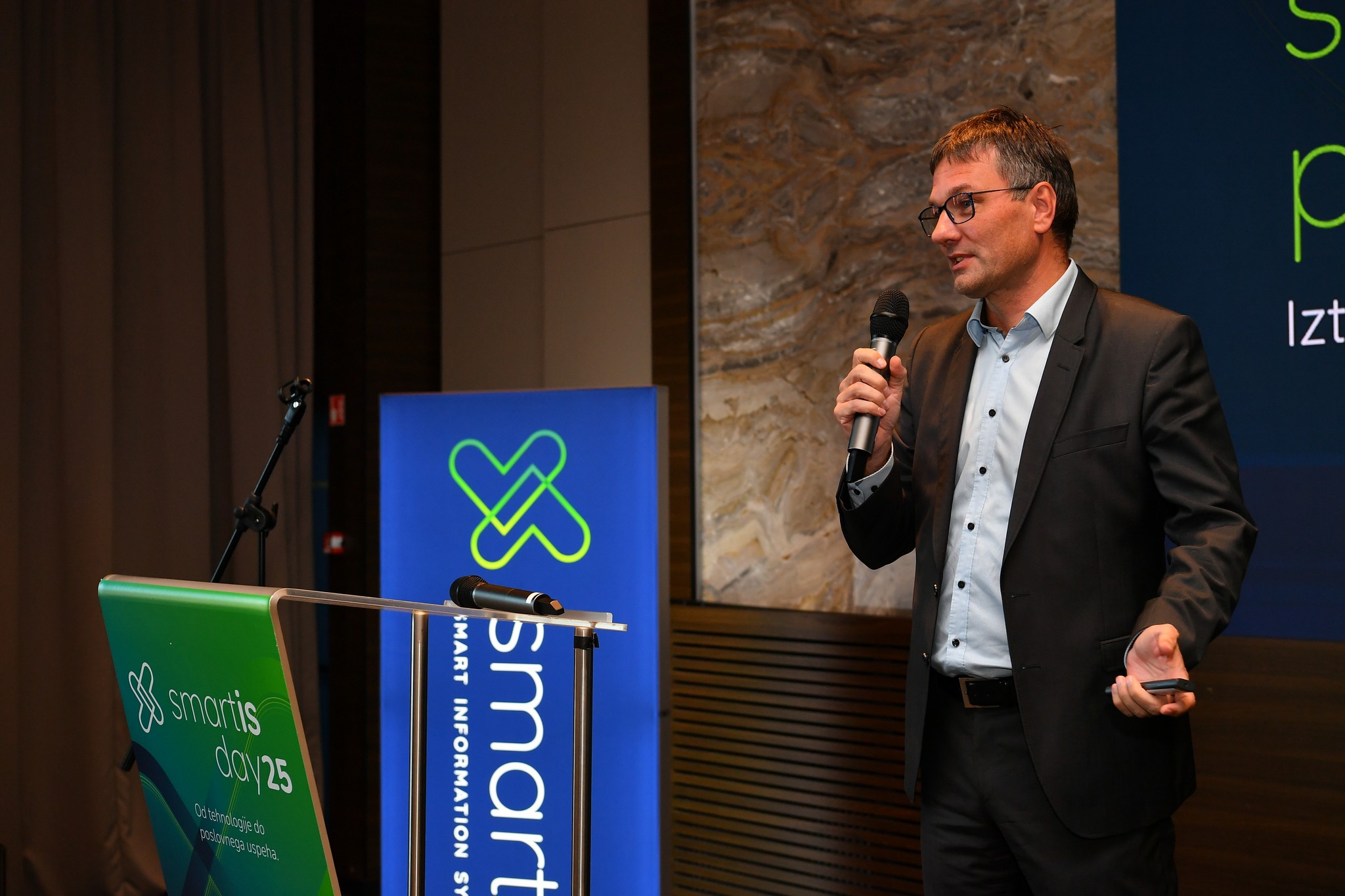
Can companies still afford to rely on backups without a resilience strategy? Cyberattacks don’t just delete files; they threaten the very foundations of IT systems, warned Iztok Sitar at Smartis Day ’25. The Data Center Sales Consultant at Smartis was clear: »Backups alone can no longer guarantee the company’s security. Today, a timely resilience strategy is critical for survival.«
Recovery Must Be Fast After an Attack
Just ten years ago, companies mainly created backups to recover from disk failures or accidental deletions. Today, cyberattacks are a daily reality, and attackers target the last safe copies of data that businesses rely on to maintain operations.
»Backups used to be an insurance policy. Now, they’re a lifeline,« Sitar emphasizes. That’s why companies are increasingly moving from traditional backup software to so-called cyber resilience platforms. They opt for solutions that not only safeguard data but also ensure rapid business recovery in the event of an attack.
New Strategies for Business Continuity
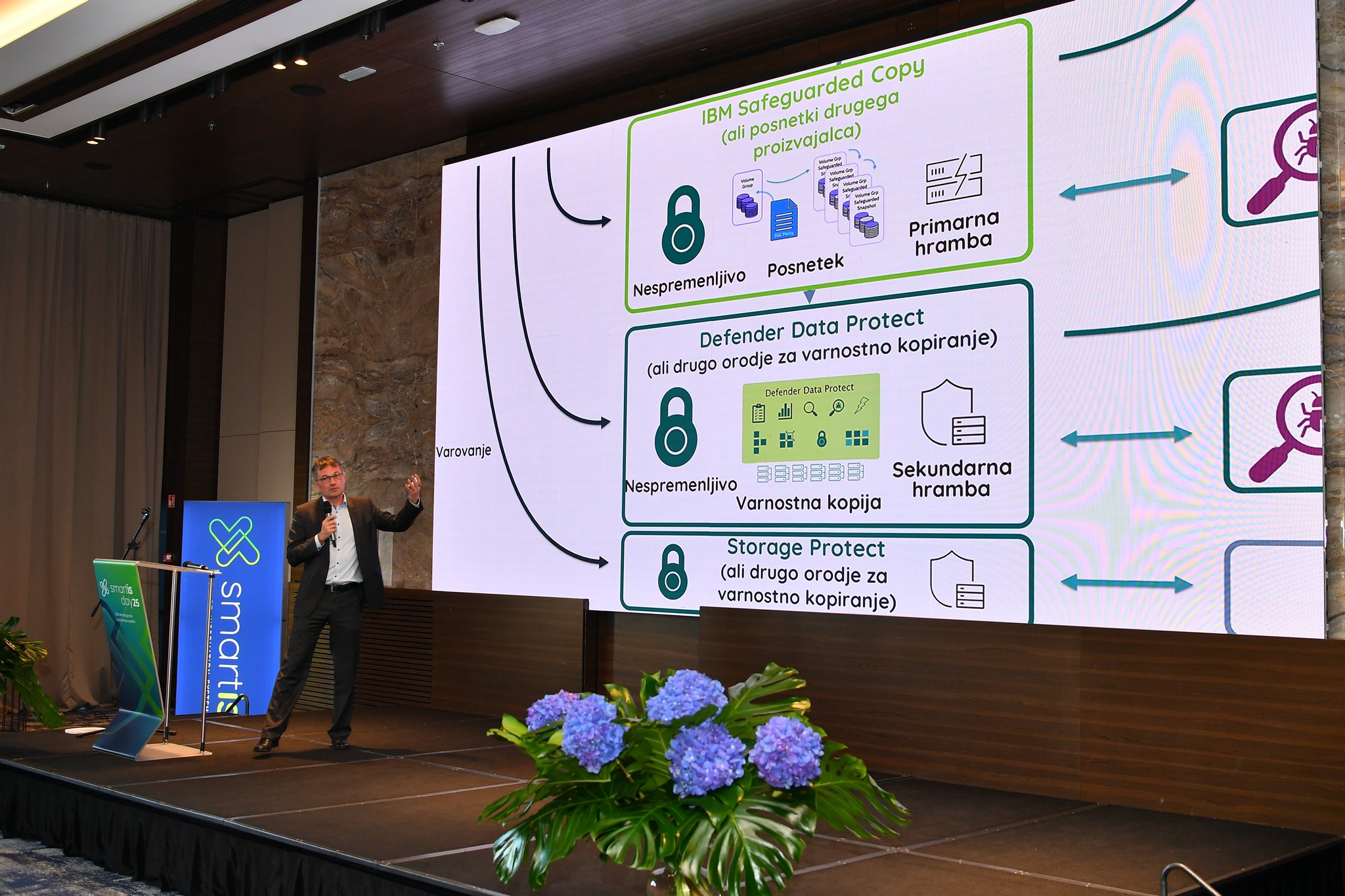
In recent years, IBM has substantially overhauled its traditional approach to data protection. Its classic Spectrum Protect solution is being gradually replaced by the modern IBM Storage Defender platform. This modular system integrates multiple security components, from sensors that monitor system activity to attack detection mechanisms and data recovery tools.
A key innovation is Data Protect, which focuses on a critical question: how quickly can operations be restored after an attack? Rather than focusing solely on the number of backup copies or retention periods, Data Protect encourages companies to plan for the time to full recovery. »Time is money, and if we can get a functioning environment up and running in hours instead of weeks after an attack, we’ve already won,« explains Sitar.
How Modern Systems Detect Compromised Backups
IBM’s modern data protection architecture is built around several integrated security layers. The first layer uses sensors that continuously monitor data changes and ensure that it remains encrypted. The second layer enforces immutability, preventing anyone — even administrators — from modifying backups. The final layer consists of isolated testing environments or clean rooms, where backups are verified using additional security tools.
Attacker tactics evolve, so IBM uses AI-powered backup verification to analyze and flag safe or compromised copies, ensuring companies know which backups to trust.
Gradual, Risk-Free Transition
Companies already using IBM solutions can gradually transition with the credit-based Storage Defender model, integrating new features step by step alongside existing tools to test, adapt, and modernize without disrupting operations.
In a world where attacks are inevitable, protecting data has taken on a new dimension. It’s no longer just about backups. It’s about resilience, speed, and smart recovery. As Sitar emphasizes,»Don’t ask whether an attack will happen anymore. Ask how quickly you will be back in business afterward.«
Modern Data Protection Solutions
At Smartis Day ’25, Iztok Sitar, Data Center Sales Consultant at Smartis, presented IBM solutions designed to help companies adapt to modern threats and the needs of today’s business environments in his talk Plan Your Transition to a Modern Data Protection Solution.